Difference Between Grass Fed and Regular Beef
 Back
Back What's the Beef? The Pros and Cons of Grass Fed vs. Grain Fed
It is no hugger-mugger that Canadians honey their beefiness. Whether eating steaks fresh from the barbecue, enjoying spicy chilli, or excavation into a classic burger, Canadians each consumed on average more than 20-five kilograms of beefiness in 2018 alone, and this number is projected to remain stable in 2019.
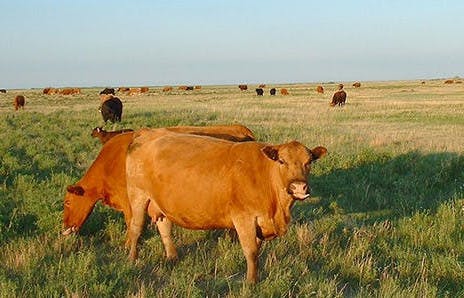
It is no secret that Canadians dear their beef. Whether eating steaks fresh from the barbecue, enjoying a spicy chilli, or digging into a classic burger, Canadians each consumed on boilerplate more than twenty-five kilograms of beef in 2018 alone, and this number is projected to remain stable in 2019. Food trends may be irresolute beyond the country, just one matter is clear: for many individuals and families, beef is a dietary staple.
There are a diversity of cultural reasons for this. Canada, a country abode to peoples from all over the world, has a rich and varied cuisine; but the availability and quality of Canadian beefiness is ideally suited to dishes as dissimilar every bit Korean bulgogi, Argentinian milanesa, Hungarian casserole, Ukrainian borscht, Turkish kebabs, and Indonesian satay — as well as Western European classics like steak frites, meatballs, and steak and kidney pies. For millions of Canadians, the gustation of beef is the gustation of the homeland.
But there are other reasons why beef is such a big hit in this country. Between the rolling hills of the southern Ontario and the swell cattle ranges of Alberta'due south prairies, Canada has a long tradition of producing some of the best cattle in the world. And with truLOCAL, the only meat delivery services across the state that has specialized from the beginning in providing the very best local and sustainable beef straight to customer'southward doors, getting concord of the best Canadian beef is easy.
But while Canadians' appetite for beefiness hasn't changed, the style they recall almost sourcing it certainly has. Twenty years ago, the local food movement existed just on the cultural periphery; things like the one hundred mile diet were however years abroad from reaching the mainstream, and most people didn't think too much about where their meat was coming from.
All of that began to alter in the first decade of the new millennium, as a growing awareness of the ecological impact of industrial agriculture began to play a role in consumer choices. Suddenly, there was a genuine interest on the office of consumers in learning more about where their nutrient had come from, and smaller, locally based producers began to realize there was a real market for artisanal meats that had been raised in humane and environmentally responsible means.
This movement toward local food was abetted by a growing market for less processed nutrient. Foods that had, when they offset appeared on supermarket shelves in the mid-twentieth century, once been seen as innovative and modern were criticized for beingness poor in nutrients and lacking in substantial wellness benefits. Whole foods, on the other hand, were celebrated for their nutritional value, flavour, and ecology purity.
When it came to meat, this interest in the origins of food also became an involvement in how cattle, poultry, and pigs were raised. Massive, industrial-style feedlots had long been criticized by environmentalists and animal rights activists, but they increasingly came under the criticism of health advocates likewise.
Ground-breaking books like The Omnivore'south Dilemma and films like Food, Inc. brought these bug into the mainstream, and for families across the country, the question of what to eat for dinner increasingly became ane with pressing upstanding implications. Given the problematic nature of so many modernistic farming practices, how were ordinary people to extricate themselves from an industrial nutrient organisation that seemed as though information technology was as unsustainable every bit it was omnipresent?
The Rise of Grass-Fed Beef
Ane solution many local-food advocates turned to was grass-fed beefiness. While virtually cattle are raised eating grass, at least initially, as beef production became industrialized in the twentieth century, and more focussed around massive feedlot operations, many farmers took to "finishing" their cows on feed mixtures made from grains and corn.
This means — as you volition probably know if you have always gone looking for more info on grass-fed beef — that the true difference between grass-fed and non-grass-fed is actually a difference in the finishing process. All cattle showtime out eating grass, only grass-fed beef cattle are raised eating merely grass.
The grain finishing process made it possible to fatten cattle up faster and become them to marketplace sooner, and it speedily became a standard exercise both in large-scale industrial operations and on local farms. In and of itself, at that place is naught bad or harmful near grain finishing, but it does modify the composition and flavour of the meat.
For example, grass-fed beef tends to be significantly bacteria than grain-finished, with less fat marbling and a darker colour. This is indicative of one of the biggest overall differences betwixt grass-fed and grain-finished, which is fat content: one thing near nutrient writers agree on when talking about grass-fed beefiness'due south distinctiveness is the fashion an all-grass diet changes the means in which fatty is stored in the fauna's body.
This comes out in the flavour besides: grass-fed striploin steaks are going to have an earthier, more complex flavour that often reminds first-fourth dimension eaters of game meats like deer and moose (which makes sense, given that deer and moose also tend to have a wild constitute-based diet). It also changes how you lot cook the meat: because of its lower fatty content, grass-fed beef becomes tough more easily, which means that you take to have greater care when preparing the meat.
Many chefs find that grass-fed beef benefits greatly from being tenderized and marinated, and it is mutual for cooks working with grass-fed cuts to exist more liberal in their use of olive oil and butter. Well-nigh people who complain that grass-fed beefiness is tougher and less enjoyable than grain-finished are simply not cooking it correctly.
Grass-Fed vs. Grain-Finished: Is There Really a Deviation?
In the years since grass-fed beefiness became a major market tendency, it has go mutual to see claims that grass-fed beef is healthier for consumers. While the debate is ongoing, most experts at present hold that while grass-fed probably has a slight border on grain-fed in terms of health value, the difference is negligible.
As for the deviation in environmental impact, grass feeding certainly approximates traditional ways of raising cattle, but it too makes farmers less reliant on candy feeds, in turn reducing the carbon footprint involved in the production of beefiness cattle. But this does not mean that grain-finished beefiness is necessarily less environmentally friendly than grass-fed. Rather, these ways of raising cattle tin can exist seen every bit complementary, each producing a distinct type of beefiness that is valued past diners who have a sense of taste for information technology.
This is in role considering grain-finished beef is not necessarily feedlot beef; many minor-scale producers focused on artisanal methods of husbandry grain-cease their beef to produce high quality, deliciously marbled steaks, and information technology is definitely possible to purchase grain-finished beefiness that is locally and sustainably sourced. Buying grain-finished beef does not necessarily mean purchasing a less ethically produced product.
But this isn't to say that there won't be meaning differences in other ways. A 100% grass-fed ribeye steak will have a different season profile from a ribeye that is grain-finished (and, depending on which wellness experts you cite, it may be slightly healthier than the grain-finished ribeye), but the difference mostly comes downwardly to preference. Those who love the earthier, more distinctive flavour of grass-fed beef will likely gravitate toward it, while those who adopt a more traditional beefiness season volition probably find that it takes some getting used to.
What ultimately matters much more are the overall conditions in which the cow was raised. A full-bodied creature feedlot operation where thousands of caput of cattle spend miserable loves crowded around the trough is not going to plow out high-quality meat, and information technology certainly isn't going to turn out meat that is sustainable. All of the evidence points to the fact that these massive operations volition need to be discontinued if the globe is to motion toward a more sustainable model of food production.
Then what does this mean for the consumer? It means that the first question you should ask about your beef is not whether information technology is grass-fed or non (unless, of course, you absolutely love the flavour of grass-fed), but whether information technology has been raised locally and in sustainable ways. At truLOCAL, we are proud to source both grass-fed and grain-finished beefiness from providers who are passionate about sustainable food systems.
1 of the many things that set usa apart from other meat delivery services is the fact that we are passionate nigh only sourcing the best. To this cease, nosotros have cultivated relationships with dozens of local farming operations in Ontario, Alberta, and British Columbia. All of the producers we work with share our commitment to ethical production and environmental stewardship, and we provide total transparency via our website nigh where every product in our meat deliver boxes is coming from.
Whether you are looking for the very best grass-fed beef from in-province farms that go the extra mile to ensure that their animals are raised solely on pasturage, or you want to eat your fill up of classic, well-marbled grain-finished cuts of filet mignon, striploin, and ribeye, with truLOCAL, you know you are getting a sustainable, humane, and ethically produced meal.
But this isn't the only thing that makes united states different from other kinds of meat delivery: not just is our production superior, but our service itself is also more customer-centric.
We launched truLOCAL because we believed that it should be possible for whatever person in Canada to purchase sustainable local meat and take it delivered straight to their door, no matter where they alive. If yous want to understand how the service works, the all-time thing to do is get started with your social club today — with our easy-to-navigate website and intuitive points-based system of building orders, we brand it easy for you to select the meats you lot desire, and because we give you the option of setting a repeating gild to be filled every two or three weeks, or monthly, it's easy to ensure that yous always have high-quality meat available.
Unlike other meat delivery services, however, we don't require you lot to subscribe to regular commitment, and there are no contracts involved. At truLOCAL, we understand that the affair nearly shoppers want almost out of a delivery service, after high-quality product, is flexibility, so even if you practice opt for a repeating society, should you lot always want to pause information technology or skip an instalment, we make information technology easy to do then.
When it comes to delivery, we're as well dissimilar from the competition. Our box sizes are designed for single individuals and families, and because each cut comes individually wrapped in a refrigerated container, you don't need to worry virtually being home to receive your order in person: nosotros tin leave your box on your doorstep or with your building concierge; we tin even deliver to your office, gym, or cottage!
This ways that beef fans in Ontario, British Columbia, and Alberta never need to go without their favourite cuts; with truLOCAL'southward fresh meat commitment service, the all-time beefiness in the country is never more than a couple of clicks away. No matter where yous autumn on the grass-fed/grain-finished divide, we can hook you upwardly with exactly the meat y'all're looking for.
If you lot're tired of supermarket beef that doesn't provide any data about the origin of the meat or how it was produced, why not switch to truLOCAL and start shopping for your beef the xx-first century way? Guild your beginning meal box today, and find out for yourself why and then many Canadians are turning to meat delivery services to get the food they want in the most convenient fashion possible.
Posted on July 28th, 2021
Source: https://trulocal.ca/blog/133/whats-the-beef-the-pros-and-cons-of-grass-fed-vs-grain-fed
0 Response to "Difference Between Grass Fed and Regular Beef"
Post a Comment